Ingredients
Equipment
Method
- Preheat your oven to 175°C (350°F). Grease your loaf pan and set aside.
- In a large bowl, beat the softened butter and sugar together with an electric mixer until the mixture is light, fluffy, and turns a pale yellow—about 3-4 minutes. You should hear a gentle whirring and see the mixture increase in volume.
- Add the eggs one at a time, beating well after each addition. The mixture should become smoother and slightly thicker, with a glossy appearance.
- In a separate bowl, whisk together the flour, baking powder, and a pinch of salt. Gradually add the dry ingredients to the wet mixture, alternating with the milk, starting and ending with the flour. Mix until just combined, taking care not to overmix.
- Divide the batter evenly into two bowls. To one, gently fold in the cocoa powder until fully incorporated, creating a rich chocolate batter.
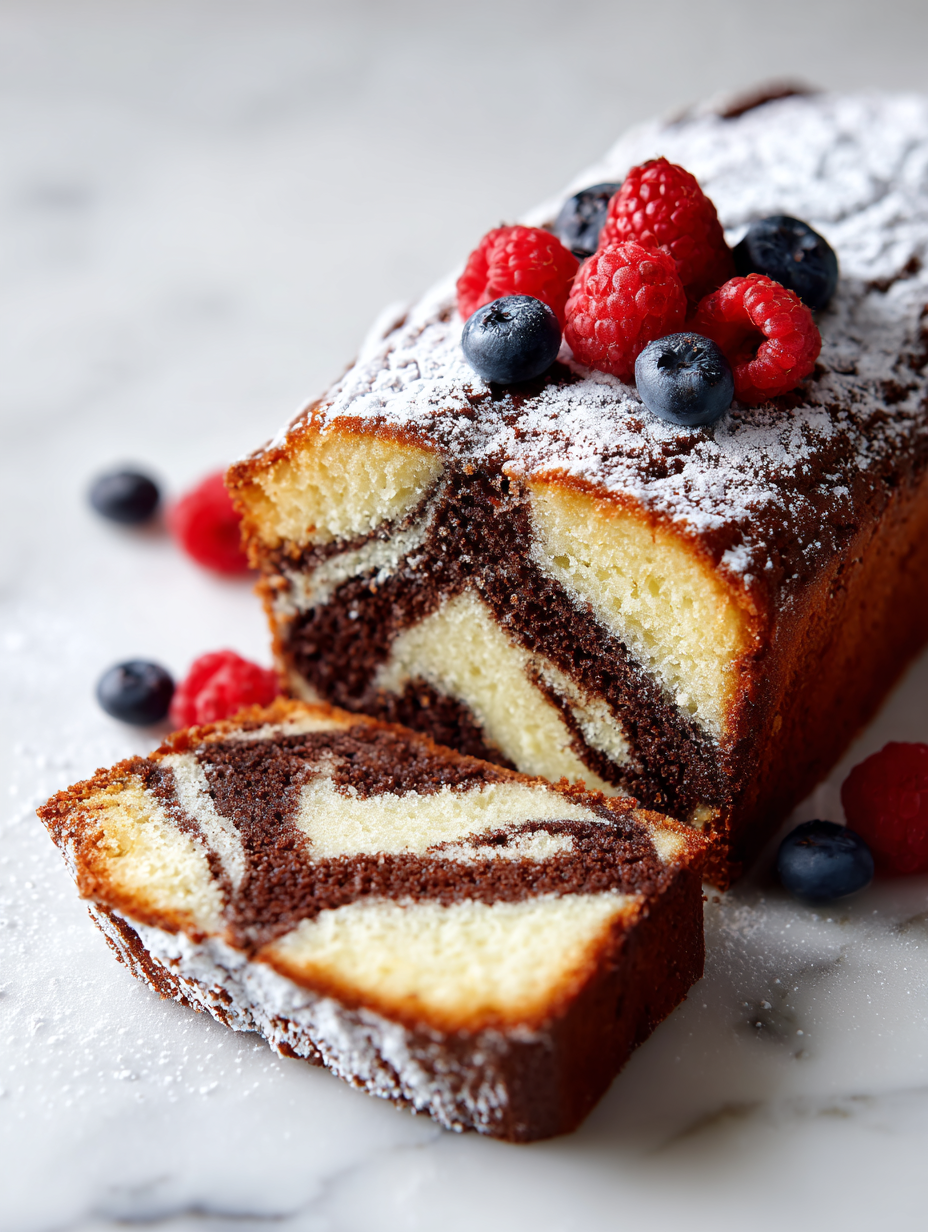
- Spoon the vanilla batter into the prepared loaf pan, then add dollops of the chocolate batter on top in a random pattern. Using a toothpick or skewer, gently swirl through the batters in a figure-eight motion, creating a marbled effect without overmixing.
- Bake the cake for 55-60 minutes, until the top is golden and a toothpick inserted into the center comes out clean. If the top browns too quickly, loosely tent with foil halfway through baking.
- Remove the cake from the oven and let it cool in the pan for about 15 minutes. Then, transfer it to a wire rack and cool completely for at least 1 hour to set the pattern.
- Once cooled, slice the cake with a serrated knife to reveal the beautiful marbled pattern. Serve at room temperature, perhaps with a dusting of powdered sugar or a dollop of whipped cream.
Notes
For a more pronounced marbling, gently swirl the batters just until the pattern begins to form. Avoid overmixing, which can blend the colors entirely. Using high-quality cocoa powder enhances the depth of the chocolate streaks.