
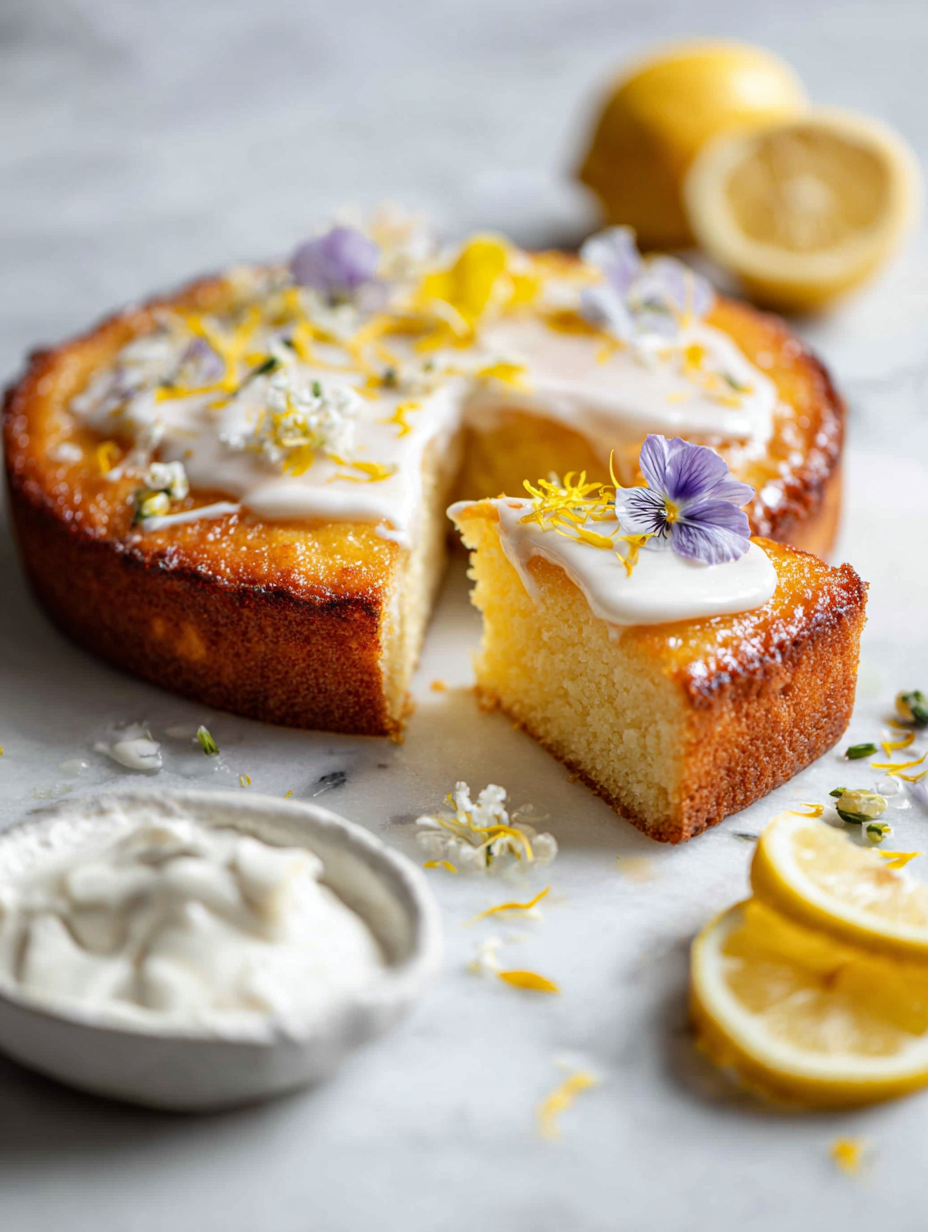
I’ve always loved the way lemons can lift a dessert from simple to extraordinary, and this ricotta lemon cake is no exception. It’s like a burst of sunshine, soft and tangy, with just enough sweetness to keep everything balanced. What makes it special isn’t just the lemon zest, but how it plays with the creamy richness of the ricotta, creating a texture that’s almost cloud-like in every bite.
Baking this cake feels like capturing a little slice of spring, even if it’s the middle of winter outside. The zest fills the kitchen with that fresh, citrusy aroma that makes everyone lean in closer. I’ve tweaked the recipe over the years, but the bright, lively flavor of lemon combined with the silky ricotta still remains my go-to for a dessert that feels both comforting and lively at the same time.
There’s something about the simplicity of it that makes it perfect for any occasion, whether I’m just craving something sweet after dinner or bringing it to a brunch gathering. It’s honest, it’s straightforward, and it never fails to bring a little lift of happiness, especially when topped with a dusting of powdered sugar or a drizzle of honey.
Exploring how the brightness of fresh lemon zest can transform a simple ricotta cake into a lively, almost citrusy cloud in your mouth, making it feel like spring wrapped up in dessert.
Bright citrus in every bite
- That first slice, with the lemon aroma wafting up, always feels like a little celebration in my kitchen.
- Baking this cake reminds me of lazy Sunday mornings at my grandma’s house, where citrus and ricotta were always a thing.
- I love how a touch of lemon zest can turn a simple cake into a lively, almost citrusy cloud in your mouth.
- There’s a quiet pride I feel when I see guests’ surprised faces at how bright and tender it is.
- Sometimes I add a dollop of honey or a sprinkle of powdered sugar just to make it feel more special, even on weekdays.
The bright spark behind this cake
- This cake came about one rainy afternoon when I found a forgotten jar of ricotta in the fridge, begging to be used. I had a lemon on the counter, its bright zest calling out, and I just threw them together without overthinking. The result was a surprisingly delicate, tangy cake that somehow felt like a breath of fresh air on a gloomy day.
- Over the years, I’ve made this recipe for friends who needed a little lift, for brunches that turned into long, lingering afternoons, and even for quiet mornings when I wanted something simple but special. It’s one of those recipes that feels honest—no fuss, just good ingredients and a sense of celebration with every bite.
- heading: ‘A cake born from necessity and lemon zest’
Historical & Cultural Tidbits
- This cake’s popularity likely grew in Italy, where ricotta and citrus are staple ingredients in traditional desserts.
- Lemon and ricotta pairing dates back to ancient Italian recipes, emphasizing the bright, creamy contrast appreciated in Mediterranean sweets.
- The use of ricotta in cakes became more widespread in the 20th century as home baking simplified, making it accessible to home cooks worldwide.
Ingredient breakdown: key components
- Ricotta: I love how it lends a creamy, slightly grainy texture that melts smoothly in your mouth. If you want a lighter feel, try part-skim ricotta, but the flavor might be a tad less rich.
- Lemon zest: Bright, aromatic, and essential for that lively citrus punch. Use only the outermost layer to avoid bitterness, and don’t skimp—more zest equals more sunshine in each bite.
- All-purpose flour: Provides structure without overshadowing the delicate flavors. For a tender crumb, sift it well; skip this step if you want a denser cake.
- Sugar: Balances the tanginess with a gentle sweetness. Adjust slightly if you prefer a less sweet or more zingy cake—just keep in mind, too little sugar can dry it out.
- Eggs: Bind everything together and give lift. Room temperature eggs blend more smoothly, so nudge them out of the fridge an hour before mixing. If you overmix, the cake can turn rubbery—mix just until combined.
- Olive oil: Adds moisture and a subtle fruity note. Use a mild, good-quality oil; a strong-flavored oil can overpower the delicate lemon and ricotta flavors.
- Baking powder: The leavening that makes it rise. Double-check its freshness; if it’s old, the cake might be a flat disappointment.
Spotlight on key ingredients
Ricotta:
- I love how it lends a creamy, slightly grainy texture that melts smoothly in your mouth. If you want a lighter feel, try part-skim ricotta, but the flavor might be a tad less rich.
- Lemon zest: Bright, aromatic, and essential for that lively citrus punch. Use only the outermost layer to avoid bitterness, and don’t skimp—more zest equals more sunshine in each bite.
Lemon zest:
- Bright, aromatic, and essential for that lively citrus punch. Use only the outermost layer to avoid bitterness, and don’t skimp—more zest equals more sunshine in each bite.
- Bright, aromatic, and essential for that lively citrus punch. Use only the outermost layer to avoid bitterness, and don’t skimp—more zest equals more sunshine in each bite.
Notes for ingredient swaps
- Dairy-Free: Swap ricotta for firm silken tofu blended until smooth. Keeps the creamy texture, but loses that mild, milky richness.
- Lemon Zest: Use lime or orange zest for a different citrus aroma. Orange gives a sweeter, mellow note, lime adds a sharper tang.
- Flour: Substitute with gluten-free all-purpose flour blend. The texture might be slightly denser, but it still works well.
- Sugar: Replace with honey or maple syrup, reduce the liquid slightly. Expect a richer, more complex sweetness with a hint of flavor.
- Olive Oil: Use melted coconut oil or neutral vegetable oil. Coconut oil adds a subtle tropical scent; neutral oil keeps it simple.
- Baking Powder: Ensure freshness or try with a small amount of baking soda plus lemon juice for lift. The cake may be slightly denser without fresh leavening.
- Eggs: For an egg-free version, use applesauce or mashed banana, but the rise and texture will differ slightly.
Equipment & Tools
- Oven: To bake the cake evenly at 180°C (350°F).
- 20cm (8-inch) round cake pan: To contain the batter during baking.
- Parchment paper: To prevent sticking and ease removal.
- Whisk: To blend ricotta, sugar, and zest smoothly.
- Spatula: To fold dry ingredients gently and smooth the batter.
- Cooling rack: To cool the cake evenly without moisture buildup.
Step-by-step guide to baking
- Preheat your oven to 180°C (350°F). Grease a 20cm (8-inch) round cake pan and line the bottom with parchment paper.
- In a large bowl, whisk together 1 cup ricotta, 1 cup sugar, and the zest of 2 lemons until smooth and slightly fluffy, about 2 minutes.
- Add 3 large eggs one at a time, mixing gently after each addition. Incorporate 1/4 cup olive oil gradually, stirring until just combined.
- Sift together 1 1/2 cups all-purpose flour and 1 teaspoon baking powder. Gently fold into the wet mixture in 2 additions, avoiding overmixing.
- Pour the batter into the prepared pan, smoothing the top with a spatula. Bake for 40-45 minutes, or until the top is golden and a toothpick inserted comes out clean.
- Check for doneness: the cake should be slightly domed and set around the edges. The aroma should be bright and lemony.
- Remove from oven and let cool in the pan for 15 minutes. Then, transfer to a wire rack and cool completely before finishing.
Let the cake cool completely on a wire rack. Once cooled, dust with powdered sugar or serve with a dollop of whipped cream and extra lemon zest for brightness.
How to Know It’s Done
- The top is golden and slightly cracked, with a fragrant lemon aroma.
- A toothpick inserted in the center comes out clean or with moist crumbs, not wet batter.
- The cake feels firm but tender when lightly pressed, not jiggly or overly dense.
Ricotta Lemon Cake
Ingredients
Equipment
Method
- Preheat your oven to 180°C (350°F). Grease the cake pan and line the bottom with parchment paper for easy removal.
- In a large bowl, whisk together the ricotta cheese, sugar, and lemon zest until the mixture is smooth, creamy, and fragrant—the lemon aroma should be lively and inviting.
- Add the eggs one at a time, gently whisking after each addition to incorporate fully. The batter will start to lighten and become slightly fluffy.
- Pour in the olive oil gradually, stirring gently until just combined. The mixture should be smooth and slightly glossy.
- Sift the flour and baking powder together, then gently fold into the wet mixture in two parts, using a spatula. Be careful not to overmix—stop as soon as the flour disappears into the batter.
- Pour the batter into your prepared pan, smoothing the top with a spatula. The batter should be thick but pourable, with a bright lemon scent filling the kitchen.
- Bake for 40-45 minutes, or until the top is golden and a toothpick inserted into the center comes out clean. The cake will be slightly domed and fragrant with lemon.
- Remove the cake from the oven and let it cool in the pan for about 15 minutes. Then transfer it to a wire rack to cool completely—it should feel firm but tender when gently pressed.
- Once cooled, dust the top generously with powdered sugar or serve with a drizzle of honey and extra lemon zest for added brightness. Slice to reveal a soft, airy crumb with a lively citrus aroma.
Notes
Pro tips for perfect ricotta lemon cake
- Zest: Use only the bright yellow outer peel, avoiding bitter pith for a citrus punch.
- Gentle Folding: Mix dry ingredients into wet just until combined to keep the cake tender and airy.
- Check Early: Start testing with a toothpick at 40 minutes; a clean stick means done, moist crumbs are okay.
- Cool Thoroughly: Let the cake cool completely on a wire rack before slicing to prevent crumbling and sticking.
- Flavor Boost: Brighten the lemon aroma further with a pinch of lemon extract in the batter, but don’t overdo it.
- Oven Warmth: Rotate the cake halfway through baking if your oven heats unevenly, for an even rise and golden top.
Common mistakes and how to fix them
- TOO MUCH ZEST: Use only the outer lemon peel; bitter pith ruins bright flavor.
- OVER-MIXED BATTER: Mix just until ingredients are combined to keep the cake tender.
- UNDER-BAKED CAKE: Test with a toothpick; it should come out clean, not wet or sticky.
- NOT COOLING COMPLETELY: Let the cake rest fully to avoid crumbling when slicing.
Quick Fixes & Pantry Swaps
- If batter is too thick, splash in a tablespoon of milk to loosen it.
- When cake cracks on top, shield it with foil for the last 10 minutes of baking.
- DUMPED the lemon zest—add it gradually for a balanced citrus aroma.
- Over-torched edges? Patch with a knife and cover with foil to prevent bitterness.
- Splash a little lemon juice on the surface if the cake looks dull and dry.
Make-Ahead & Storage Tips
- Prepare the batter up to a day in advance; keep it covered in the fridge to maintain freshness and lemon brightness.
- Store the cooled cake tightly wrapped in plastic wrap or in an airtight container; it stays moist for 2-3 days in the fridge.
- For longer storage, freeze slices wrapped individually in foil or freezer bags for up to 1 month. Thaw at room temperature.
- Reheat refrigerated or frozen slices briefly in a 150°C (300°F) oven for 10 minutes until warm and fragrant. The lemon aroma should shimmer again.
Top questions about Ricotta Lemon Cake
1. Can I use dried lemon zest instead of fresh?
Use fresh lemon zest for the brightest, most fragrant citrus flavor that really lifts the cake. Dried zest can work, but it loses that lively punch.
2. Can I substitute lemon juice for zest?
Yes, but the texture may be slightly denser, and the flavor less vibrant. You might need a bit more zest or lemon juice to compensate.
3. Can I replace lemon zest with lemon juice?
Absolutely, but the cake will be less aromatic. Use about 2-3 tablespoons of lemon juice to add brightness without making it too wet.
4. How do I know when the cake is done?
Ensure your oven is fully preheated to 180°C (350°F) and check the cake around 40 minutes; it should be golden and set.
5. Should I let the cake cool before serving?
Let the cake cool completely on a wire rack before slicing. This helps it set and prevents crumbling, especially around the edges.
6. How do I avoid overmixing the batter?
Use a light hand when folding in dry ingredients. Overmixing can make the cake dense and rubbery instead of tender and airy.
7. How long can I keep the cake fresh?
You can store the cake in an airtight container at room temperature for up to 2 days or refrigerate for 3 days. Bring to room temp before serving for best flavor.
8. Can I freeze leftover cake?
Yes, you can freeze slices wrapped tightly in plastic wrap and foil for up to a month. Thaw at room temperature and reheat slightly if desired.
9. What if my cake cracks on top?
If the top cracks, shield it with foil during the last 10 minutes of baking. To fix a crack after baking, gently press it back together and dust with powdered sugar.
10. My batter is too thick, what should I do?
A splash of milk can loosen a thick batter. Use sparingly, starting with a teaspoon, to keep the texture smooth and pourable.
Baking this ricotta lemon cake is like capturing a little burst of sunshine with every slice. It’s simple, honest, and perfect for when you want something lively but comforting. No matter the season, that bright lemon aroma and creamy crumb always feel just right.
And honestly, once you get the hang of it, it’s the kind of dessert that makes your kitchen smell fresh and inviting. It’s a reminder that good ingredients, a bit of zest, and a gentle hand can turn into something truly memorable to share or keep all to yourself.

Hi, I’m Benjamin Reynolds, the creator behind Strategically Seasoning. I started this blog because I believe great cooking is not random. It is thoughtful. It is intentional. It is built step by step with purpose. Seasoning is not something you sprinkle at the end and hope for the best. It is a strategy.