
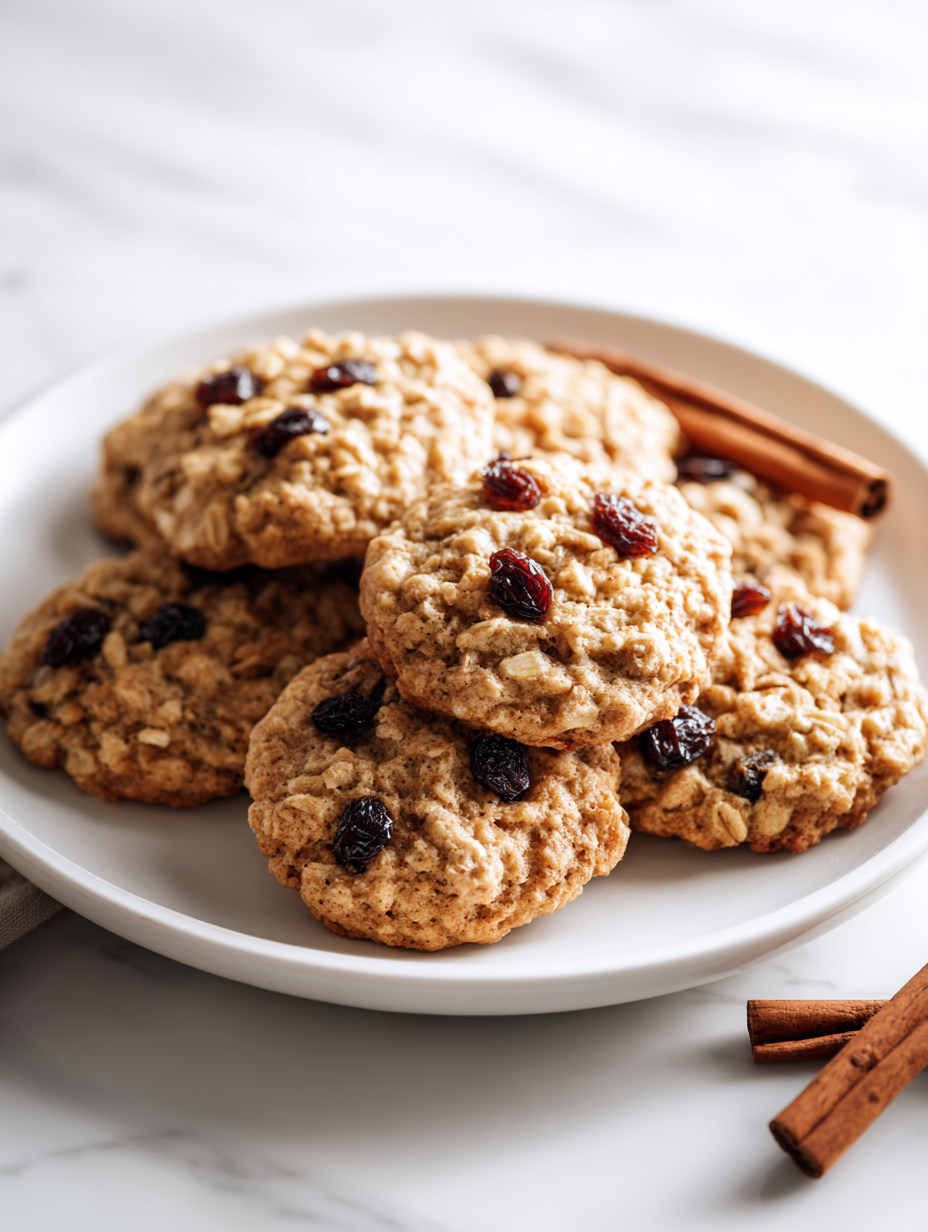
There’s something about the warm smell of oatmeal cookies baking that instantly pulls me back to simpler times. It’s that cozy, slightly nutty aroma that makes the house feel alive, like a small, sweet hug. This recipe for oatmeal raisin cookies isn’t fancy, but it’s honest, and it always hits a nostalgic note for me, reminding me of lazy weekend mornings or sneaking a cookie before dinner.
Making these cookies is a bit like a ritual — a quiet moment of grounding in a busy life. The process is straightforward, but the results are surprisingly soulful. I love how the chewy oats and plump raisins come together in a golden, crackly crust that’s just right — not too sweet, with a hint of cinnamon that feels like a gentle embrace.
Focusing on the nostalgic comfort of homemade oatmeal raisin cookies, I explore how a simple recipe can evoke childhood memories and provide a grounding, cozy moment in busy lives.
The story behind this recipe
I remember the first time I baked these cookies with my grandmother. The kitchen was filled with the scent of cinnamon and sweet raisins, and I felt a quiet pride when I pulled my first batch out of the oven. Over the years, this recipe has become a touchstone for me—a simple act of baking that reconnects me to family, to slower days, and to the small joys that make life sweet. It’s funny how a humble cookie can carry so many memories and moments of comfort, all wrapped up in one chewy, raisin-studded bite.
Key Ingredients and Tips
- Old-fashioned rolled oats: I love their chewy bite and nutty aroma that fills the kitchen. For a softer cookie, try quick oats, but they’ll lack that hearty texture.
- Raisins: Plump and sweet, I prefer soaking mine in warm water for 10 minutes before mixing. If you want more tartness, swap in dried cranberries or chopped dried cherries.
- Brown sugar: It gives that deep caramel flavor and chewy texture. Light brown sugar keeps it mild, but dark brown adds a molasses-rich punch—use whichever fits your mood.
- Butter: I use unsalted and melt it for easier mixing, but if you prefer a richer flavor, go for browned butter. Just watch it carefully so it doesn’t burn.
- Cinnamon: A pinch adds warmth and nostalgia. If you love spice, bump it up to 1 teaspoon, or swap with nutmeg or ginger for a different zing.
- Eggs: They help everything bind and give structure. For a vegan version, try flaxseed meal—mix 1 tablespoon with 3 tablespoons water, and let it gel.
- Vanilla extract: A splash heightens all the warm flavors. If you don’t have any, a bit of almond extract can add a lovely depth, but use sparingly.
Spotlight on key ingredients
Oatmeal and Raisins:
- Old-fashioned rolled oats: I love their chewy bite and nutty aroma that fills the kitchen. For a softer cookie, try quick oats, but they’ll lack that hearty texture.
- Raisins: Plump and sweet, I prefer soaking mine in warm water for 10 minutes before mixing. If you want more tartness, swap in dried cranberries or chopped dried cherries.
Notes for ingredient swaps
- Dairy-Free: Swap butter for coconut oil or vegan butter. Expect a slightly different richness and a hint of coconut aroma.
- Sweetener: Use honey or maple syrup instead of brown sugar. The cookies will be a bit softer and have a different caramel note.
- Raisins: Substitute with dried cranberries or chopped dried cherries for a tart punch and vibrant color.
- Oats: For gluten-free, choose certified gluten-free rolled oats. Texture remains hearty but check for cross-contamination.
- Flour: Whole wheat flour can replace all-purpose for a nuttier flavor and denser cookie; reduce liquid slightly if needed.
- Add-ins: Chopped nuts, chocolate chips, or coconut flakes can be mixed in for extra texture and flavor variations.
- Spice: Nutmeg or ginger can replace cinnamon for a warmer, spicier profile—adjust to taste.
Equipment & Tools
- Mixing bowl: Combine ingredients evenly.
- Wooden spoon or spatula: Mix and fold ingredients.
- Baking sheet: Hold cookies during baking.
- Parchment paper: Prevent sticking and promote even baking.
- Cookie scoop: Portion dough uniformly.
Step-by-step guide to oatmeal raisin cookies
- Equipment & Tools: Gather a mixing bowl (for combining ingredients), a wooden spoon or spatula (for mixing), a baking sheet (lined with parchment paper), and a cookie scoop (for uniform dough portions).
- Preheat your oven to 180°C (350°F). Line the baking sheet with parchment to prevent sticking and ensure even baking.
- In a large bowl, cream together 1/2 cup (115g) melted butter and 1 cup (200g) brown sugar until smooth and slightly fluffy, about 2 minutes with a spoon or spatula.
- Add 1 large egg and 1 teaspoon vanilla extract to the butter-sugar mixture. Mix well until thoroughly combined, about 30 seconds.
- In a separate bowl, whisk together 1 1/2 cups (135g) rolled oats, 1 cup (125g) all-purpose flour, 1/2 teaspoon baking soda, 1/2 teaspoon cinnamon, and a pinch of salt.
- Gradually add the dry ingredients to the wet mixture, stirring just until combined. Do not overmix — a few streaks of flour are fine.
- Stir in 1 cup (150g) raisins and, if you like, a handful of chopped nuts or chocolate chips for extra texture.
- Using a cookie scoop or spoon, portion out the dough onto the prepared baking sheet, spacing about 2 inches apart to allow for spreading.
- Bake in the preheated oven for 10–12 minutes, until the edges are golden brown and the centers look set but still soft.
- Remove from oven and let the cookies sit on the baking sheet for 5 minutes—this helps them firm up without overbaking.
- Transfer cookies to a wire rack to cool completely. They should be chewy but with a slight crunch around the edges.
- Rest for at least 10 minutes before serving to let flavors meld and texture set fully.
Allow cookies to cool completely on a wire rack. Resting helps develop flavor and firm texture before serving.
How to Know It’s Done
- Edges are golden and slightly crisp, center looks soft but not wet.
- A gentle jiggle in the middle indicates just-baked softness that will set upon cooling.
- A quick tap with a finger leaves a slight imprint but no doughy residue.
Homemade Oatmeal Raisin Cookies
Ingredients
Equipment
Method
- Preheat your oven to 180°C (350°F) and line a baking sheet with parchment paper.
- In a large mixing bowl, combine melted butter and brown sugar. Stir with a wooden spoon until the mixture is smooth and slightly fluffy, releasing a warm caramel aroma.
- Add the large egg and vanilla extract to the bowl. Whisk or stir until fully incorporated and the mixture is glossy.
- In a separate bowl, whisk together rolled oats, all-purpose flour, baking soda, and cinnamon.
- Gradually add the dry ingredients to the wet mixture, stirring gently until just combined. The dough should be sticky and thick, with a nutty aroma from the oats.
- Stir in the drained raisins, distributing them evenly throughout the dough. The raisins will plump up and add bursts of sweetness.
- Use a cookie scoop to portion out the dough onto the prepared baking sheet, spacing each portion about 2 inches apart to allow for spreading.
- Bake in the preheated oven for 10–12 minutes, until the edges are golden brown and the centers look set but still soft.
- Remove the baking sheet from the oven and let the cookies rest for 5 minutes; they will firm up slightly and develop a crackly crust.
- Transfer the cookies to a wire rack to cool completely. The centers should stay chewy, with a rich, nutty aroma filling the air.
- Enjoy these warm or at room temperature, perhaps with a glass of milk or a cozy cup of tea.
Notes
Pro tips for perfect oatmeal cookies
- Bolded mini-head: Slightly underbake the cookies for a chewy center, then let them firm up as they cool.
- Bolded mini-head: Use room temperature butter to ensure a smooth, even mixture and better spread.
- Bolded mini-head: For extra chewiness, add an extra tablespoon of oats to the dough before baking.
- Bolded mini-head: Chill the dough for 30 minutes if it’s too sticky; it firms up for easier scooping.
- Bolded mini-head: For more caramel flavor, sprinkle a tiny pinch of sea salt on top right before baking.
- Bolded mini-head: Rotate your baking sheet halfway through baking to ensure even coloring and doneness.
Common mistakes and how to fix them
- FORGOT to check oven temperature → Use an oven thermometer for accuracy.
- DUMPED in all flour at once → Add gradually, folding to avoid dense cookies.
- OVER-TORCHED edges → Reduce baking time or oven temperature slightly.
- MISSED resting time → Let cookies cool completely for optimal texture.
Quick fixes and pantry swaps
- When cookies spread too much → Chill the dough for 30 minutes before baking.
- If cookies are too soft → Bake an extra 2 minutes, then let cool on the sheet briefly.
- Splash a little milk if cookies are dry or crumbly after baking.
- Patch over uneven edges with a spoonful of dough for a more uniform look.
- Shield from pantry odors by storing cookies in airtight containers with a slice of bread.
Prep, store, and reheat tips
- Prep the dough a day ahead by chilling it in the fridge. It firms up, making scooping easier and flavors meld.
- Store baked cookies in an airtight container at room temperature for up to 4 days. They stay chewy and fragrant, with a hint of cinnamon.
- For longer storage, freeze cookies in a sealed bag for up to 3 months. Thaw at room temp, and they’ll retain their chewy texture.
- Reheat in a 150°C (300°F) oven for 5 minutes to revive their warmth and aroma, or microwave for 10 seconds for a quick snack. Expect the smell of warm oats and sweet raisins to waft out.
Top questions about oatmeal raisin cookies
1. Can I use dried cranberries instead of raisins?
Yes, soaking raisins in warm water for 10 minutes plumps them up, making them juicier and sweeter in the cookie.
2. What other dried fruits work well?
Absolutely. Dried cranberries or cherries add a tart contrast, and they stay plump if soaked briefly beforehand.
3. Can I make these cookies dairy-free?
Yes, you can replace butter with coconut oil or vegan margarine, but the texture might be slightly softer or less rich.
4. Can I use quick oats instead of rolled oats?
Using quick oats instead of rolled oats results in a softer, less chewy cookie, but still tasty.
5. How do I know when the cookies are done?
Baking at 180°C (350°F) for 10-12 minutes usually gives the best results—edges golden, centers chewy.
6. Why are my cookies spreading too much?
If cookies spread too much, chilling the dough for 30 minutes helps. Overbaking makes them crisp, so watch the edges.
7. How should I store these cookies?
Storing baked cookies in an airtight container at room temperature keeps them chewy for up to 4 days.
8. How do I reheat leftover cookies?
Reheat cookies in a 150°C (300°F) oven for 5 minutes. The aroma of warm oats and cinnamon will fill the kitchen.
9. Should I chill the dough before baking?
Chilling the dough makes it easier to scoop and enhances flavor. It’s a good step if your dough is sticky.
10. Any tips for shaping the cookies?
Use a cookie scoop for uniform size. Slightly underbaking keeps the centers chewy, then cool on a rack for perfect texture.
Baking these oatmeal raisin cookies is more than just a sweet task; it’s a quiet act of nostalgia that reconnects me with simpler days. The warm smell of cinnamon and toasted oats fills the house, making every batch feel like a small, comforting ritual.
In the end, it’s these humble cookies—crunchy around the edges, chewy inside—that remind me how a little bit of butter, sugar, and patience can bring a moment of joy and memory to life.

Hi, I’m Benjamin Reynolds, the creator behind Strategically Seasoning. I started this blog because I believe great cooking is not random. It is thoughtful. It is intentional. It is built step by step with purpose. Seasoning is not something you sprinkle at the end and hope for the best. It is a strategy.