
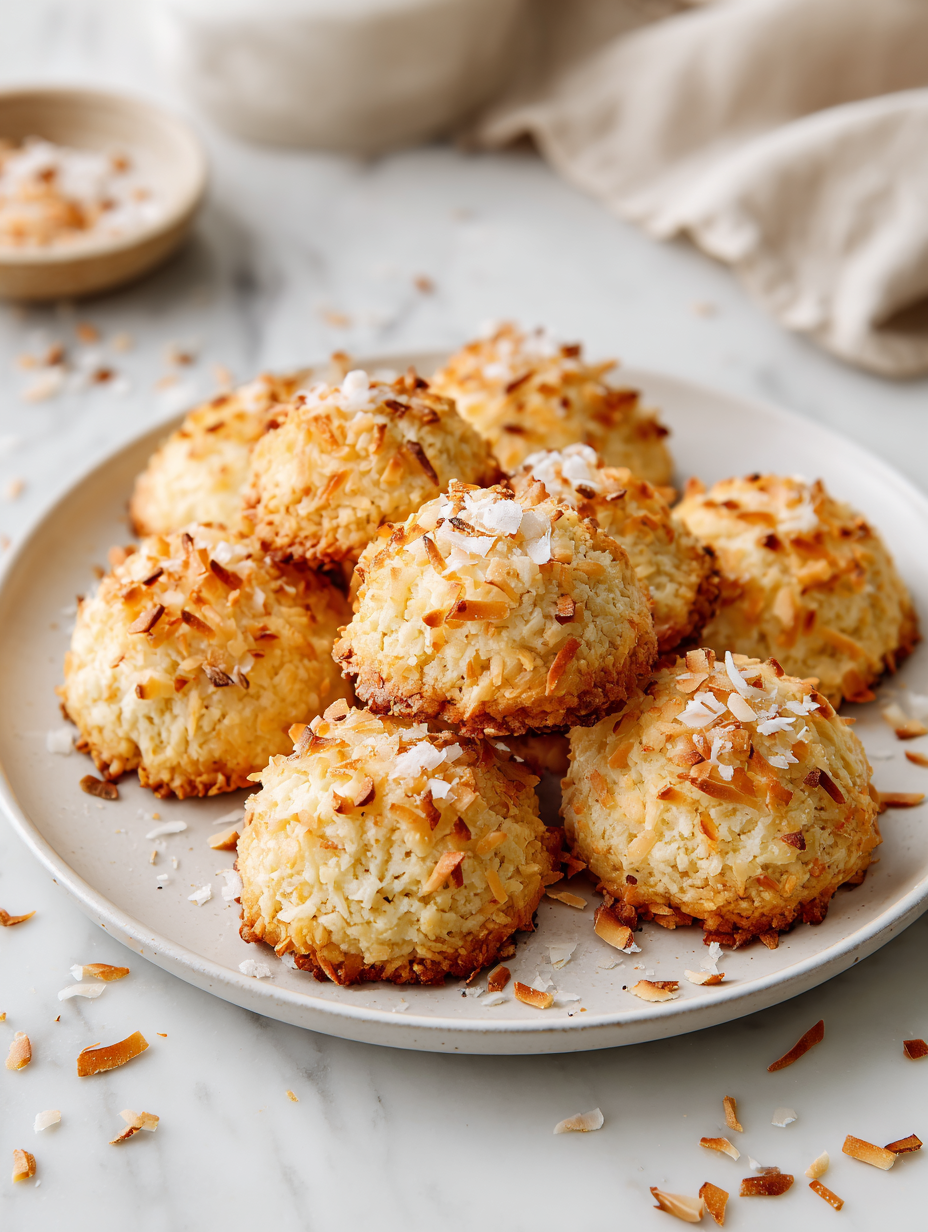
Coconut cookies seem simple, but there’s an art to balancing that delicate sweetness with a deep, toasted coconut aroma. It’s about coaxing out the rich, nutty scent that fills the kitchen as they bake, making the whole house smell like a tropical escape. I love how a handful of toasted coconut flakes can turn a basic cookie into something with real depth and texture.
This recipe is my go-to when I want a treat that’s both satisfying and a little nostalgic. I’ve played with the amount of sugar and coconut to get it just right—enough to be sweet, but not overwhelming, with a crunch that catches every bite. Baking these feels like a quiet act of mindfulness, turning simple ingredients into something truly memorable.
Focusing on the overlooked art of balancing the subtle sweetness and rich coconut aroma in cookies, this recipe emphasizes the importance of toasted coconut flakes for depth and texture, creating a sensory journey from aroma to crunch.
The story behind this recipe
- This recipe was born out of a lazy afternoon when I found a bag of toasted coconut flakes left over from another project. The aroma of toasted coconut always pulls me back to childhood beach trips, where the scent of salty air and sweet coconut mingled perfectly. I wanted to capture that nostalgic feeling in a cookie that’s simple but packed with flavor.
- One afternoon, I threw together a batch just to see if I could enhance that toasted coconut aroma without overpowering the cookie’s subtle sweetness. The first bite was a surprise—crunchy, fragrant, with a hint of saltiness that balanced the sweetness beautifully. Since then, I keep tweaking it, but that initial spark of inspiration still drives me to perfect these cookies.
- heading:
Key Ingredient Insights
- Coconut flakes: I love using toasted flakes for that deep, smoky aroma that fills the kitchen; skip to untoasted if you want a milder coconut flavor.
- Butter: Creaming butter with sugar creates that tender, melt-in-your-mouth texture; for extra richness, try a touch of coconut oil in place of some butter.
- Sugar: I prefer a mix of brown and white sugar for complexity—brown adds a caramel note that complements the coconut’s nuttiness; go all white for a cleaner sweetness.
- Eggs: They bind everything together and add moisture; using a room-temperature egg ensures even mixing—cold eggs can make the dough stiff and tough.
- Vanilla: A splash of pure vanilla really enhances the coconut aroma; if you want more depth, a hint of coconut extract intensifies the flavor.
- Flour: I stick with all-purpose flour for the best structure, but a touch of almond flour can add a subtle nuttiness—just don’t overdo it, or the cookies get dense.
- Salt: A small pinch balances the sweetness and boosts the coconut’s aroma; if you like a more pronounced salty-sweet contrast, sprinkle a little flaky sea salt on top before baking.
Spotlight on key ingredients
Coconut flakes:
- I love using toasted flakes for that deep, smoky aroma that fills the kitchen; skip to untoasted if you want a milder coconut flavor.
- Butter: Creaming butter with sugar creates that tender, melt-in-your-mouth texture; for extra richness, try a touch of coconut oil in place of some butter.
- Sugar: I prefer a mix of brown and white sugar for complexity—brown adds a caramel note that complements the coconut’s nuttiness; go all white for a cleaner sweetness.
Shredded coconut:
- Butter: It’s the backbone of these cookies, offering richness and tenderness; room temperature butter mixes more smoothly and evenly.
- Adds texture and bursts of coconut flavor; toasting it enhances the aroma and brings out a smoky, caramel note that’s irresistible.
Notes for ingredient swaps
- Dairy-Free: Swap butter for coconut oil or vegan margarine. Expect a slightly softer cookie with a subtler richness.
- Sweetener: Use honey or maple syrup instead of sugar; cookies may spread more and have a richer, caramelized aroma.
- Coconut: For a milder flavor, replace toasted coconut flakes with sweetened shredded coconut; the aroma will be less smoky.
- Flour: Almond or oat flour can be used for gluten-free options; cookies will be more tender and have a slightly nutty flavor.
- Eggs: Flaxseed meal or applesauce as egg replacers will alter the texture—more delicate or chewier, depending on choice.
- Add-ins: Mix in chopped nuts or dried fruit instead of extra coconut for variety; keep in mind they might affect spreading and texture.
- Salt: Use sea salt flakes or Himalayan salt for a different crunch and flavor contrast; reduce slightly if using very salty salts.
Equipment & Tools
- Mixing bowls: To combine ingredients comfortably.
- Hand or stand mixer: To cream butter and sugar efficiently.
- Measuring cups and spoons: For precise ingredient measurements.
- Baking sheet: To hold cookies during baking.
- Parchment paper: To prevent sticking and ensure even baking.
- Wire rack: To cool cookies evenly.
Step-by-step guide to coconut cookies
- Gather all ingredients and equipment before starting. Preheat your oven to 180°C (356°F). Line a baking sheet with parchment paper.
- In a large bowl, cream together 1 cup of softened butter and 1 cup of sugar for about 3-4 minutes until light and fluffy. Use a hand mixer or stand mixer on medium speed.
- Add 1 large egg and 1 teaspoon of vanilla extract. Mix until fully incorporated, about 30 seconds. Scrape down the sides of the bowl.
- In a separate bowl, whisk together 2 cups of all-purpose flour, 1/2 teaspoon of baking soda, and 1/4 teaspoon of salt.
- Gradually add the dry ingredients to the wet mixture. Mix on low speed just until combined. Do not overmix, as this can make cookies tough.
- Fold in 1 1/2 cups of toasted coconut flakes and 1/2 cup of shredded coconut for texture and aroma. Use a spatula for even distribution.
- Scoop dough using a tablespoon or cookie scoop onto the prepared baking sheet. Space about 2 inches apart to allow spreading.
- Bake in the preheated oven for 10-12 minutes. The edges should turn golden brown, and the coconut will smell fragrant and toasty.
- Remove cookies from oven. Let sit on the baking sheet for 5 minutes to firm up, then transfer to a wire rack to cool completely.
- Allow cookies to rest for at least 10 minutes before serving. They should be crunchy on the edges but still chewy in the center.
Let the cookies rest on the wire rack for 10 minutes to set their structure. Serve warm or at room temperature, ideally with a cup of tea or coffee.
How to Know It’s Done
- Edges are golden brown, with a fragrant toasted coconut aroma.
- Cookies feel firm but not hard when gently pressed.
- Cookie bottoms are evenly golden, not burnt or pale.
Toasted Coconut Cookies
Ingredients
Equipment
Method
- Preheat your oven to 180°C (356°F) and line a baking sheet with parchment paper. Gather all your ingredients for a smooth baking process.
- In a large mixing bowl, cream together the softened butter and sugar using a hand or stand mixer on medium speed. Continue for about 3-4 minutes until the mixture is light, fluffy, and slightly pale in color, filling your kitchen with a sweet aroma.
- Add the large egg and vanilla extract to the creamed mixture. Beat for about 30 seconds until fully incorporated, and the mixture looks smooth and glossy.
- In a separate bowl, whisk together the all-purpose flour, baking soda, and salt. This ensures even distribution of leavening and salt in your dough.
- Gradually add the dry ingredients to the wet mixture, mixing on low speed. Mix just until the flour is combined; avoid overmixing to keep the cookies tender.
- Gently fold in the toasted coconut flakes and shredded coconut with a spatula. The toasted flakes will infuse a deep, smoky aroma, while shredded coconut adds texture.
- Scoop tablespoon-sized portions of dough onto the prepared baking sheet, spacing them about 2 inches apart to allow for spreading.
- Bake for 10-12 minutes, or until the edges are golden brown and fragrant. You’ll notice the aroma of toasted coconut filling your kitchen as they bake.
- Remove the cookies from the oven and let them sit on the baking sheet for 5 minutes. This helps them set and prevents breaking when transferring.
- Transfer the cookies to a wire rack to cool completely. As they cool, they will develop a satisfying crunch on the edges with a chewy center, showcasing a beautiful golden hue and toasted aroma.
- Enjoy these cookies warm or at room temperature, perhaps with a cup of tea or coffee, and savor the rich coconut flavor and delightful crunch with every bite.
Pro tips for perfect coconut cookies
- Toast coconut flakes until golden and fragrant—this deepens flavor and adds smoky notes.
- Chill the dough for at least 30 minutes—this prevents spreading and enhances texture.
- Use a light hand when folding in shredded coconut—too much can make cookies dense and greasy.
- Bake until edges are just golden—overbaking leads to dryness, underbaking leaves them too soft.
- For extra crunch, bake cookies a minute longer than you think—listen for a gentle crackle.
- Rotate the baking sheet halfway through—ensures even browning without burnt edges.
- Cool cookies on a wire rack—this keeps bottoms crisp and prevents sogginess.
Common mistakes and how to fix them
- TOO MUCH BUTTER: Use less butter if cookies spread too thin and become greasy.
- OVER TOASTING: Keep an eye on coconut flakes; burnt flavor ruins the aroma and taste.
- MISSED RESTING: Allow cookies to cool fully to develop crunch and prevent breakage.
- SKIPPING SALT: Add a pinch for flavor contrast; without it, cookies may taste flat.
Quick fixes and pantry swaps
- When cookies spread too much → Chill the dough before baking.
- If cookies are too soft → Increase baking time or let cool longer.
- Splash with lemon juice → Brightens flavor if coconut is bland.
- Patch a crackling surface → Lightly spray with water and bake briefly.
- Shield with parchment → Prevent burning when oven runs hot.
Prep, store, and reheat tips
- Prepare the dough in advance and refrigerate for up to 24 hours; it firms up and makes scooping easier, with a richer flavor after resting.
- Store baked cookies in an airtight container at room temperature for up to 5 days; they stay chewy with a slight crunch if kept sealed.
- Freeze cookies individually wrapped for up to 3 months; to reheat, warm in a 150°C (300°F) oven for 5 minutes until fragrant and toasty.
- Refrigerated dough can be baked directly from cold, though they may need an extra minute—watch for golden edges and fragrant coconut aroma.
Top questions about coconut cookies
1. Can I use untoasted coconut flakes?
Use toasted coconut flakes for that smoky, rich aroma that really pops in each bite. Skip if you prefer a milder, softer coconut flavor.
2. Can I make these dairy-free?
Absolutely. To keep them dairy-free, substitute butter with coconut oil or vegan margarine. Expect a slightly softer cookie with a more subtle richness.
3. How do I make them chewier or crispier?
Yes. For a chewier texture, add an extra egg or a tablespoon of applesauce. For crisper cookies, bake a minute longer and watch for golden edges.
4. Why do my cookies spread too much?
If your cookies spread too much, chill the dough for at least 30 minutes before baking. This helps them hold their shape better.
5. What sugar should I use?
Use a mix of brown and white sugar for depth—brown adds caramel notes that enhance the coconut aroma. For a cleaner flavor, go all white.
6. When are the cookies done?
Bake until the edges are just golden and fragrant, about 10-12 minutes. The cookies should feel firm but not hard when pressed gently.
7. How should I store these cookies?
Store baked cookies in an airtight container at room temperature for up to 5 days. For longer storage, freeze individually wrapped cookies for up to 3 months.
8. How do I reheat the cookies?
To reheat, warm the cookies in a 150°C (300°F) oven for about 5 minutes until fragrant and crispy around the edges.
9. My cookies are flat—what went wrong?
If the cookies turn out flat, try chilling the dough before baking or slightly reducing the oven temperature and baking time.
10. Can I add other ingredients?
Use a light hand when folding in shredded coconut to prevent the dough from becoming too dense and greasy. Gentle mixing keeps the texture light.
Baking these coconut cookies is a small act of comfort, especially when the aroma of toasted coconut fills the house. It’s a reminder that simple ingredients can create something unexpectedly rich and layered. Sometimes, it’s the little details—like that first crunchy bite—that make all the difference.
In a world that’s often in a rush, I find these cookies offer a quiet moment of satisfaction. They’re perfect for sharing, or just keeping in hand as a sweet little escape. Baking them feels like a small ritual—grounding, honest, and entirely worth it.

Hi, I’m Benjamin Reynolds, the creator behind Strategically Seasoning. I started this blog because I believe great cooking is not random. It is thoughtful. It is intentional. It is built step by step with purpose. Seasoning is not something you sprinkle at the end and hope for the best. It is a strategy.